
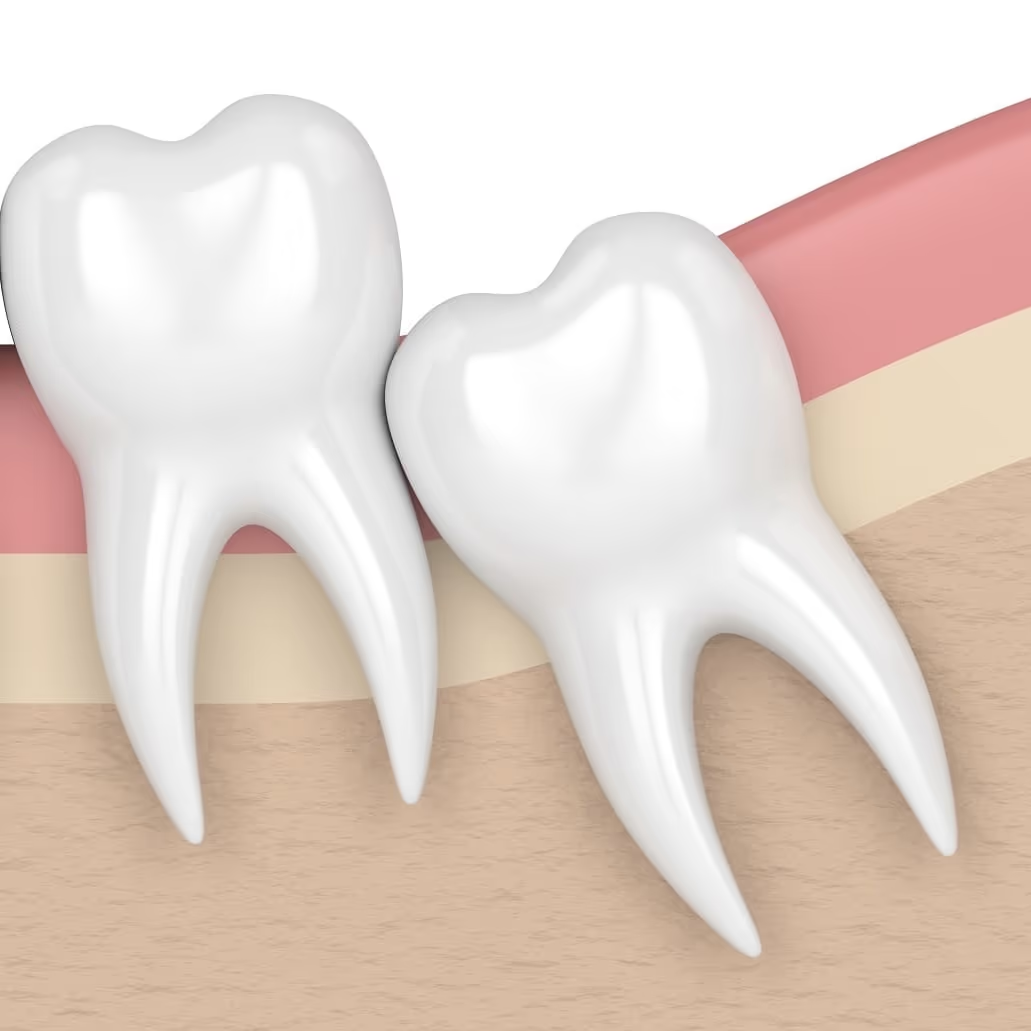
Wisdom Teeth: What should I do?
90% of people have at least one wisdom tooth in an abnormal position (impacted or semi-impacted) creating various problems, such as inflammation, periodontitis, cysts, etc., while problems are often caused in orthodontic treatment as well, since the normal alignment of adjacent teeth is obstructed.
Wisdom teeth (third molars) are the last teeth to erupt in our mouth, usually around the age of 16-18 (or slightly later). It is estimated that only 1% of adults will maintain all 4 wisdom teeth without problems for their entire life. Often, the wisdom tooth causes problems in the jawbone or the neighboring tooth, which do not cause symptoms until the damage becomes chronic and very serious.
For these reasons, the American Association of Oral and Maxillofacial Surgeons (A.A.O.M.S.) recommends the examination of adolescents and young adults by a specialized maxillofacial surgeon, regarding the condition of their wisdom teeth.
Wisdom tooth removal is a routine procedure for the oral and maxillofacial surgeon. It is performed, in most cases, under local anesthesia and lasts less than an hour. After the procedure, appropriate medication is given (painkillers and antibiotics, if needed) while there is usually some swelling (edema) which lasts a few days.
In recent years, a new method has been developed to reduce pain and swelling and accelerate healing. The method consists of using Autologous Growth Factors, substances that the body itself produces to help heal any wound. Autologous Growth Factors are obtained from the patient themselves through a simple blood draw, and after appropriate processing of the blood, they are placed in the surgical wound. The entire procedure takes only a few minutes. With the use of Autologous Growth Factors, the natural healing processes are accelerated, resulting in faster and better recovery, with less swelling and pain.
When should they be removed?
If the wisdom tooth develops and erupts correctly, without disturbing the adjacent teeth or those of the opposite jaw, and we can brush it properly, then there is no reason for extraction.
However, the wisdom tooth should be extracted if:
- it has partially emerged through the gums, resulting in inadequate cleaning by brushing and bacteria accumulating at the site,
- it causes intense pain,
- repeated episodes of gum infection are observed in the area where the wisdom tooth is located (pericoronitis),
- the wisdom tooth causes damage to adjacent teeth,
- it grows close to the inferior alveolar nerve,
- a cyst has formed at the site.
Before the extraction of the wisdom tooth, X-rays are taken to determine its exact position. The extraction is performed under local anesthesia except in very exceptional cases where general anesthesia may be administered.