
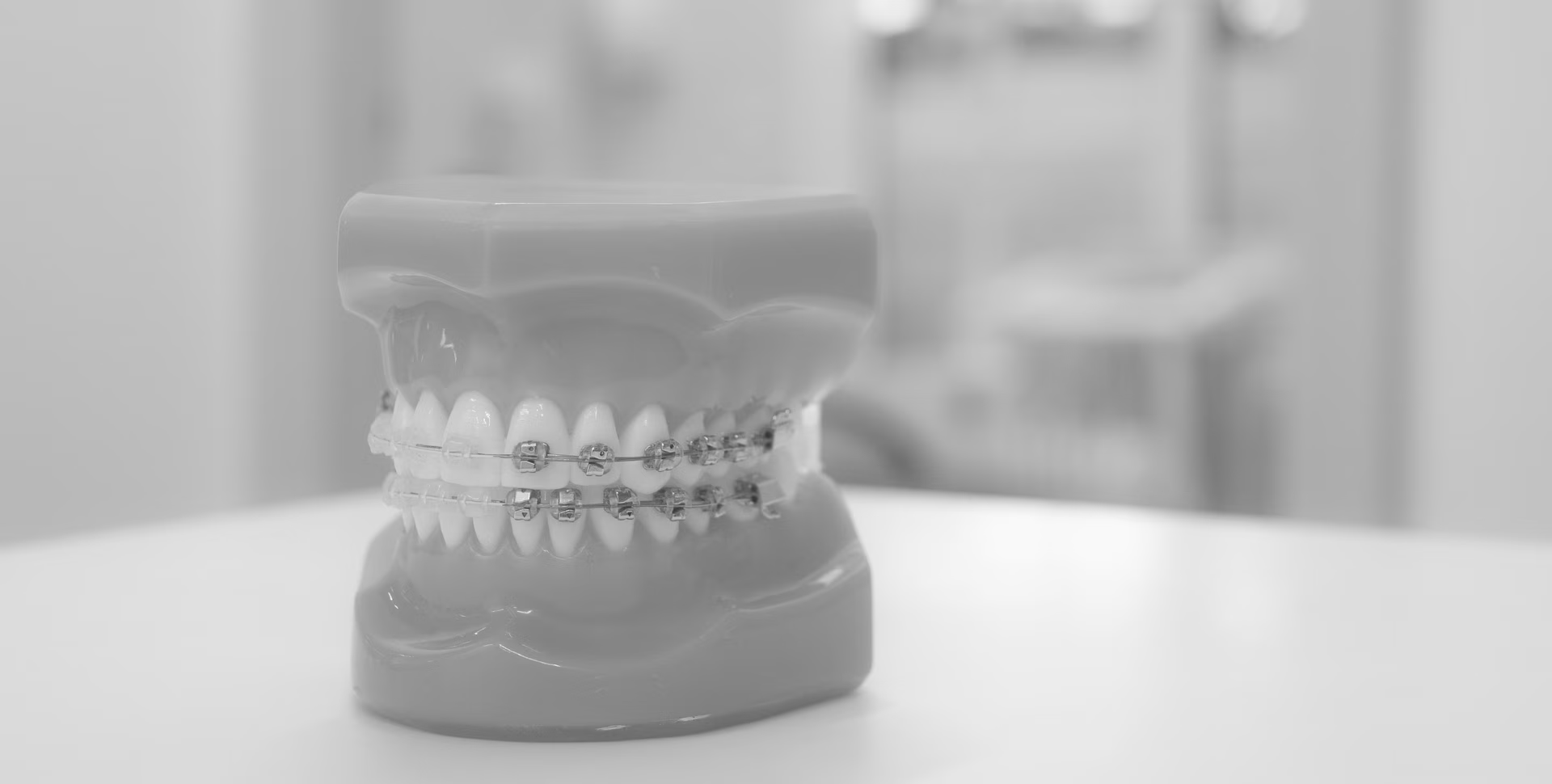
New Technology Braces
Effective and predictable orthodontic treatment for every age, even for demanding cases.
Crooked teeth or bad occlusion?
Poor alignment does not only affect aesthetics, but also mouth function. It can lead to difficulty chewing, tooth wear and occlusion problems.
THE SOLUTION
The most proven solution: orthodontics with braces
Braces remain the most effective method for teeth alignment, even in the most complex cases.
Applied to children, teens and adults
Braces can be applied at different ages and for a wide range of orthodontic needs. Treatment is planned individually, according to the position of the teeth, the bite and each patient’s goals.
Offer full control of movement
Because braces are fixed onto the teeth, the orthodontist can guide every movement with precision. This makes them especially useful in more demanding or complex cases.
Deliver stable and predictable results
With proper planning and regular monitoring, treatment restores the position of the teeth, a better bite and a functional result that goes beyond aesthetics alone.
TECHNOLOGY
Next-generation braces for greater comfort
At the clinic we use low-friction systems (Tip Edge Plus), which allow smoother and faster treatment.
Gentler forces
Less discomfort
Faster progress
Fewer visits
OPTIONS
Which option suits you?
Depending on your needs, there are different types:

Metal braces
The most classic and cost-effective solution

Ceramic (clear)
Less visible, more aesthetic

Lingual (internal)
Placed internally — fully invisible
Find the ideal choice for you
HOW IT WORKS
Treatment in 3 steps

1
Diagnosis
We examine and design the treatment.

2
Placement
Braces are placed with precision.

3
Alignment
Teeth gradually move to the correct position.
BEFORE & AFTER
Real patients, real results


Crowding
Correction of crowding (crooked teeth) & spacing (closing gap in front teeth)


Spacing
Closing gaps with orthodontic aligners & whitening


Deep bite
Correction of deep bite (lower teeth visible) & repositioning of posterior teeth (wider smile)


Midline shift
Correction of front teeth midline shift with orthodontics & veneers


Midline shift
Correction of teeth midline shift & deep bite correction (lower teeth visible)


Crowding
Correction of crowding (crooked teeth) after orthodontic treatment
FAQ
Frequently asked questions
Mild discomfort in the first days.
Usually 12–24 months, depending on the case.
Yes — treatment is done at any age.
Approximately every 4–6 weeks.
The duration depends on age, the difficulty of the case, the bite and the plan the orthodontist designs. In many cases treatment can last from a few months to around 2 years or more, when the case is more complex.
Metal braces are the most classic, durable and proven option in orthodontics. Ceramic or clear braces work in a similar way but are more discreet, as they blend better with the natural colour of the teeth. The right choice depends on the case, age, aesthetic preferences and the orthodontist's guidance.
With braces you need to be a little careful with your diet. It's best to avoid very hard, sticky or crunchy foods that could damage or dislodge a component. After fitting, the orthodontist gives specific instructions on what to watch out for day to day.
Oral hygiene is very important during treatment with braces. Brushing should be done carefully around the brackets and wires, and special brushes or interdental tools may be needed for better cleaning. Good hygiene helps prevent decay, gingivitis and white marks on the teeth.
Follow-up appointments take place at regular intervals, depending on the treatment plan. At these appointments the orthodontist checks progress, makes the necessary adjustments and confirms that the teeth are moving according to plan.
If a bracket comes off or the wire irritates your lips or gums, you should contact the practice for instructions. There's no need to panic, but it's important to have the problem assessed so that treatment isn't interrupted or delayed.
Speech is usually not significantly affected by traditional braces. A few days of adjustment may be needed, especially at the start of treatment, but most patients get used to them quickly.
Yes. After orthodontic treatment is completed, a retainer or another retention device is usually needed. Retention helps maintain the result and prevents the teeth from moving again over time.
The cost depends on the difficulty of the case, the duration of treatment and the type of braces chosen. After the orthodontic assessment, a personalised treatment plan is presented with clear information on the cost, stages and duration.
Start your treatment with the right guidance
In one visit you will know:
- which method suits you
- how long it will take
- what result to expect