
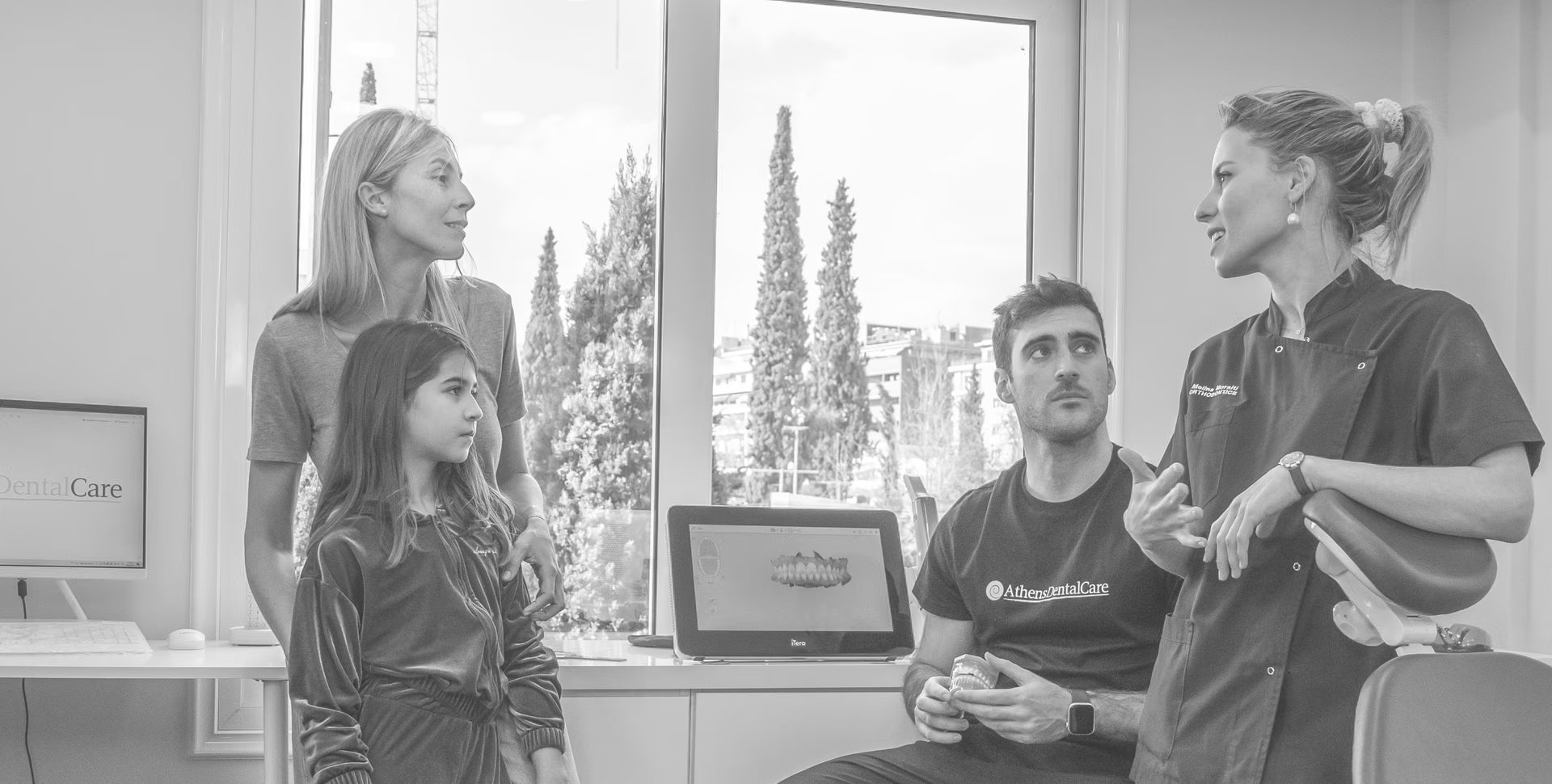
Preventive Orthodontics for Children
We properly guide the development of teeth and jaws from early on, to avoid more difficult treatments in the future.
Most orthodontic problems start at a young age
Many problems with occlusion and jaw development appear early, but are not always noticed. If not addressed in time, they can lead to more complex treatments later.
THE SOLUTION
Preventive orthodontics provides an early solution
With proper growth guidance:
We prevent serious problems
We detect early signs that could lead to crowding, a poor bite or the need for more complex treatment later on.
We create space for permanent teeth
When there is a lack of space, the orthodontist can guide the development and eruption of the permanent teeth with the right plan.
We reduce the duration of future treatment
In many cases more invasive solutions are avoided.
WHO IS IT FOR
Which children need a check-up?
Evaluation is recommended for children:
Aged 6–14
With habits like pacifier or thumb sucking
With early tooth loss
With visible occlusion problems
If the paediatric dentist or parent notices that the upper or lower jaw is developing disproportionately.
Even if there is no visible problem, the check-up is important.
WHY ATHENS DENTAL CARE
Proper diagnosis today,
a clearer plan for tomorrow.
In preventive orthodontics, the most important decision isn't always to start treatment right away. It's to make a proper diagnosis, understand how the child's teeth and jaws are developing, and decide whether intervention or simple monitoring is needed.
At Athens Dental Care, the assessment is carried out by specialist orthodontists, based on the child's age, bite, tooth position and stage of development. This way, the parent has a clear picture of what's happening today and what steps may be needed in the future.
Specialist orthodontic assessment
We check the position of the teeth, the bite, the development of the jaws and any signs that may need monitoring.
Intervention only when needed
Not every child starts treatment. In many cases, the right choice is periodic monitoring until the right time comes.
A plan based on the child's development
Preventive orthodontics doesn't only address today's problem, but takes into account how the child's mouth is expected to develop.
Guidance for the parent
We explain in simple terms what we see, what it means and what options exist, so the parent can make the right decision.
HOW IT WORKS
The process in 3 simple steps

1
Evaluation
We examine the development of teeth and jaws.

2
Intervention plan
We design a personalized approach, if needed.

3
Growth guidance
We apply gentle treatment and monitor progress.
BEFORE & AFTER
Real patients, real results


Crowding
Correction of crowding (crooked teeth) & spacing (closing gap in front teeth)


Spacing
Closing gaps with orthodontic aligners & whitening


Deep bite
Correction of deep bite (lower teeth visible) & repositioning of posterior teeth (wider smile)


Midline shift
Correction of front teeth midline shift with orthodontics & veneers


Midline shift
Correction of teeth midline shift & deep bite correction (lower teeth visible)


Crowding
Correction of crowding (crooked teeth) after orthodontic treatment
FAQ
Frequently asked questions from parents
Ideally from age 6–8.
In many cases the treatment is significantly simplified.
No, these are gentle, guiding interventions.
It depends on the development and the case.
If we wait for all the permanent teeth to come in, some problems may have become more complex. An early assessment helps the orthodontist see whether there is a lack of space, improper jaw development or bite problems that can be treated better earlier.
Preventive orthodontics can help in cases of crowding, a narrow upper jaw, crossbite, protruding teeth, lack of space for permanent teeth and certain habits that affect the development of the mouth.
The duration depends on the problem and the plan the orthodontist recommends. In some cases only monitoring is needed, while in others a short first phase of treatment may be required, followed by re-evaluation later.
In some cases, early intervention can reduce the need for more complex treatment in the future. However, it doesn't always mean braces or aligners are avoided. The goal is to create better conditions for development and for future treatment, if needed.
The assessment doesn't hurt. If an appliance or a mild intervention is needed, the orthodontist explains to the child and parent what will happen, how it's used and what the child may feel during the first days of adjustment.
The frequency of check-ups depends on the child's age and the findings of the first assessment. If immediate treatment isn't needed, the orthodontist may recommend periodic monitoring, so the development of the teeth and jaws can be checked.

Start early — make the difference in your child's smile
In one visit you will know:
- if there is a problem
- if intervention is needed
- what the right timing is